
AI Robotics Could Upend Global Manufacturing Economics, Alphabet Unit CEO Says
When the economics of manufacturing no longer hinge primarily on cheap labor, the global industrial map could be redrawn—and artificial intelligence might be the catalyst, according to the CEO of an Alphabet portfolio company working to make that shift happen.
Wendy Tan White, who leads Intrinsic, told CNBC last week that AI-enabled robotics could fundamentally alter where and how products get made. Her company, which emerged from Google's experimental X division five years ago, is betting that smarter industrial robots will enable manufacturers to compete on factors beyond labor costs—potentially allowing production to return to higher-cost markets or empowering smaller players who previously couldn't afford complex automation.
The implications for corporate finance leaders are significant. If Intrinsic's vision materializes, CFOs may need to rethink long-standing assumptions about supply chain economics, capital allocation for automation, and the strategic value of manufacturing footprint. The shift could also accelerate debates about reshoring that have intensified since pandemic-era supply chain disruptions.
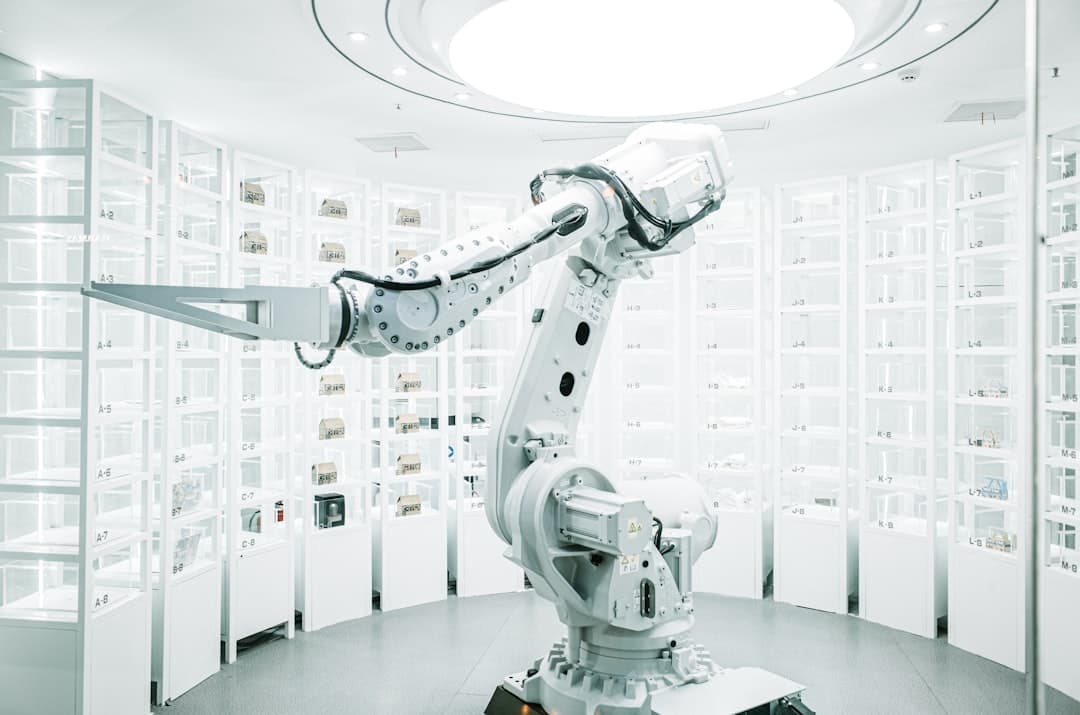
Intrinsic is pursuing this transformation through a joint venture with Foxconn, the Taiwanese manufacturing giant best known for assembling iPhones and other consumer electronics in China. Together, they're working to build what Tan White calls "the factory of the future," where AI allows robots to adapt more quickly to new tasks, handle more complicated work, and deliver greater value than traditional fixed automation.
The company's approach centers on making industrial robotics software more intelligent and accessible—essentially creating what some have called "the Android of robotics." Rather than requiring extensive custom programming for each manufacturing task, Intrinsic aims to develop systems that can learn and adjust with less human intervention.
This robotics push fits into a broader AI narrative that's driving both market valuations and corporate investment decisions. McKinsey estimated in a November report that approximately $2.9 trillion in economic value could be unlocked in the United States by 2030 if organizations successfully integrate people, AI agents, and robots into redesigned workflows—though the consulting firm emphasized this depends on companies preparing their workforce and rethinking processes holistically rather than simply automating individual tasks.
For finance executives evaluating automation investments, Tan White's comments suggest the calculus may be shifting. Traditional industrial robots excel at repetitive tasks in high-volume settings but struggle with variability. If AI can make robots genuinely adaptable, the minimum scale required to justify automation investment could drop significantly—potentially opening advanced manufacturing to mid-sized companies that previously couldn't compete with offshore giants.
The Foxconn partnership is particularly telling. The manufacturing behemoth built its business model on labor arbitrage, operating massive facilities in lower-cost regions. Its willingness to invest in AI robotics with Intrinsic suggests even companies that benefited most from traditional offshoring see the economics changing.
The key question for CFOs: how quickly will this technology mature beyond demonstrations into production-ready systems? Intrinsic has been working on this problem for five years, and Tan White's public comments indicate the company believes it's approaching commercial viability. But the gap between promising robotics demos and factory-floor reliability has historically been wide—and expensive to bridge.
If AI robotics does enable the kind of manufacturing flexibility Tan White describes, the strategic implications extend beyond individual company decisions. Finance leaders may need to reconsider country risk assessments, evaluate new types of automation vendors, and potentially revisit make-versus-buy decisions that were settled years ago based on different cost structures.

















Responses (0 )